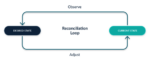
Most engineering organizations running traditional CI/CD pipelines eventually hit a ceiling. Deployments work until they don’t, and when they break, the fixes are manual, inconsistent, and hard to trace. For example, we recently reached that point after our third deployment incident in two months, each one caused by configuration drift between environments. Our pipelines had … continue reading

Executive Summary: The 2026 Engineering Leadership Pivot The Problem: Traditional SEO is failing as AI-powered search (Google Overviews/LLMs) reduces click-through rates on “commodity content.” The Solution: Brands must shift to Generative Engine Optimization (GEO) by leveraging the “borrowed authority” of trusted editorial platforms like SD Times. Key Insight: LLMs prioritize cited expertise from established domains. … continue reading
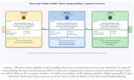
Architecture diagrams lie, a little. Not on purpose. They show boxes and arrows in clean arrangements and make everything look sequential and tidy. What they cannot show is what fails first, what surprised you, and which decisions you would fight hardest to keep if someone wanted to simplify things. This is about those decisions. The … continue reading
SAN FRANCISCO — BlueRock today announced the Trust Context Engine, a new context layer for the Agentic Action Path that helps teams move faster while making better decisions about how agents interact across tools, MCP servers, and connected components. Control has shifted from code to runtime — and without visibility into execution, teams can’t fully understand or … continue reading

Sonar releases tools to verify code in agentic development Following the recent launch of Sonar’s framework for software development in the age of AI, the Agent Centric Development Cycle, the company has announced the open beta of three new products to autonomously verify code in agent-driven development. AI agent coding are reinventing the way software … continue reading

For software engineering leaders, data availability and quality issues now represent the primary barrier to AI implementation. Organizations that lack automated quality controls embedded throughout the software development life cycle (SDLC) face escalating risks: poor data quality disrupts business operations with bugs, triggers compliance violations, and derails modernization projects. Software engineering leaders can avoid costly … continue reading
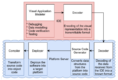
A Fortune 500 enterprise needs to implement sentiment analysis across customer support tickets, product reviews, and social media mentions. This scenario illustrates the paradigm shift from “build vs. buy” to “configure vs. code.” Organizations can approach AI implementation in three ways: building custom integrations directly against model provider APIs, purchasing separate per-vendor SaaS solutions, or … continue reading