AI, or artificial intelligence, is technology that attempts to simulate human cognitive function. A popular use case right now is ChatGPT, which allows you to conversationally ask questions to a chatbot and get back relevant information because the AI can understand what you’re asking in plain language. Beyond just answering questions, these AIs are capable of writing code, creating detailed plans based on your specifications, summarizing documents, and more.
AI has made its way into the software development space in a number of ways. AI can be baked into applications to improve end user experience by creating personalized recommendations and tailoring experiences to the end user. AI-assisted development tools can complete the piece of code you started writing, or even offer suggestions for how to improve your code. Generative AI chatbots, such as ChatGPT, can be used to ask for specific code snippets to perform a task, can explain what is happening in a piece of code, or can be used to troubleshoot why your code isn’t working as intended.
Read the articles below for more information on what you need to know about AI.

Gitar launches AI-code validation platform A startup developer infrastructure company has built AI agents for code review and CI workflows. The company is called Gitar, and its platform addresses the challenge of keeping up with AI-generated code validation using only manual qualilty gates, which cannot scale. As the amount and pace of code generated by AI … continue reading

The conversation around AI in software development has shifted from “if” it will be used to “how much” it is already producing. As of early 2026, the volume of machine-generated contributions has hit a critical mass that traditional manual workflows can no longer sustain. According to the recent Sonar State of Code Developer Survey report, AI … continue reading

For software engineering leaders, data availability and quality issues now represent the primary barrier to AI implementation. Organizations that lack automated quality controls embedded throughout the software development life cycle (SDLC) face escalating risks: poor data quality disrupts business operations with bugs, triggers compliance violations, and derails modernization projects. Software engineering leaders can avoid costly … continue reading

SOMERVILLE, Mass. — SmartBear today announced AI enhancements for API testing, UI test automation, and test management across its product suite, the SmartBear Application Integrity Core. These capabilities improve and accelerate application testing to match the increased speed and volume of AI-driven code creation. The new capabilities add agentic and AI firepower to human-led testing workflows … continue reading
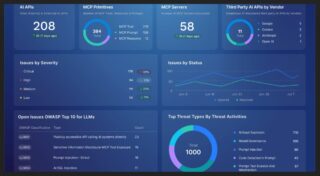
The rapid adoption of AI coding assistants has introduced a new and pressing challenge for the software industry: ensuring the security of AI-generated code. Harness, a software delivery platform provider, is tackling this today with two significant product announcements aimed at securing the entire Software Development Life Cycle (SDLC), from the moment code is written … continue reading
Copenhagen, Denmark — Leapwork announces the results of a study examining how software teams approach AI in testing and what determines confidence in its use. The study , created in conjunction with SD Times Research, shows broad optimism about AI’s role in testing. Most organizations now view AI as a priority for their future testing strategy. … continue reading
HERNDON, Va. — Revenium, the AI Economic Control System, today announced the general availability of the Tool Registry, which gives enterprises complete visibility into the true cost of their AI agent deployments. The solution goes beyond token tracking to capture the external API calls, data services, and human review steps that token-based monitoring leaves untracked. Tokens are … continue reading

AI-generated code introduces a lot of risk into the development process. A recent Sonatype report found that AI hallucinated 27% of upgrade recommendations for open source projects, while research from Veracode found that AI introduced security vulnerabilities in 45% of 80 coding tasks across 100+ different LLMs. Now, new research from Black Duck is shedding … continue reading
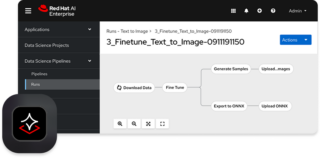
Red Hat is introducing a unified AI platform for deploying and managing AI models, agents, and applications. Red Hat AI Enterprise aims to help companies that are stuck in AI pilot phases as a result of fragmented tools and infrastructure, by offering a standard environment where organizations can perform AI inference, customize and tune models, … continue reading

Picture this: You’re testing a new AI-powered code review feature. You submit the same pull request twice and get two different sets of suggestions. Both seem reasonable. Both catch legitimate issues. But they’re different. Your instinct as a QA professional screams “file a bug!” But wait—is this a bug, or is this just how AI … continue reading

Quest Software today announced the Quest Trusted Data Management Platform, unifying data modeling, data cataloging, data governance, data quality, and a data marketplace to enable organizations to deliver AI-ready data throughout their business. It can be leveraged to create a single, unified data product that will be usable by different departments throughout the organization as … continue reading

Graphwise is attempting to address some of the challenges of RAG with its new GraphRAG offering, which is now generally available. GraphRAG acts as a semantic layer on top of knowledge graphs that LLMs can utilize to provide context-rich and verifiable answers. According to the company, a typical RAG implementation flattens data into chunks, and … continue reading