Traditional application performance management was built from the ground up to be for infrastructure operations and the emergent DevOps teams. They were not designed for product and engineering teams. But if you’re a developer, and you’re writing code to deliver to your customers in the form of an application or a service, you’d likely want … continue reading

Observability is the latest evolution of application performance monitoring, enabling organizations to get a view into CI/CD pipelines, microservices, Kubernetes, edge devices and cloud and network performance, among other systems. While being able to have this view is important, handling all the data these systems throw off can be a huge challenge for organizations. In … continue reading
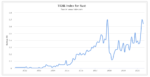
Rust has made it to the TIOBE Index Top 20 for the first time, ten years since its inception. All the verbose programming and sharp edges of other languages are solved by Rust while being statically strongly typed. Its type system prevents run-time null pointer exceptions and memory management is calculated compile-time. So no garbage … continue reading

In today’s modern software world, applications and infrastructure are melding together in different ways. Nowhere is that more apparent than with microservices, delivered in containers that also hold infrastructure configuration code. That, combined with more complex application architectures (APIs, multiple data sources, multicloud distributions and more), and the ephemeral nature of software as temporary and … continue reading

The notion of creating value streams to improve organizational efficiency and deliver higher-quality products certainly is resonating at the C-level and mid-management in large enterprises. Yet, uptake among development teams charged with creating those products has been slower to happen. There are a couple of reasons for this. One is that value stream management (VSM) … continue reading

In today’s rapidly changing software industry, it feels like disruption is happening at a faster pace than at any time in its history. How quickly we’ve gone from SOA to APIs to microservices to containers to serverless! It’s been breathless. This year’s SD Times 100 include many disruptors that came in like a wrecking ball, … continue reading

Linux 5.7 is now available. The updated version includes many changes such as ‘mmc: sdhci: Fix SDHCI_QUIRK_BROKEN_CQE,’ ‘copy_xstate_to_kernel(): don’t leave parts of destination uninitialized’ and the fixed Fix max PFN arithmetic overflow on 32 bit systems,’ among many others. The shortlog available here includes the changes that came in this last week since rc7. Aqua … continue reading

Go to any IT conference or class and you see the attendees chatting with each other about their organization’s hardware, software, and networks. But you almost never hear them talk about their staff. What is surprising about this is that study after study has shown that, of all of IT’s assets, staff is the most … continue reading

The latest issue of SD Times is now available. The June 2020 issue features the SD Times 100, highlighting companies that “tear down walls” in the industry. Also in this issue is a deeper look at observability, building a new developer experience, the most important factor in project success, and 8 traits of an Agile … continue reading