
The rush to adopt agentic AI presents significant challenges for enterprises, particularly around governance, security, and ensuring reliability in production environments. Two new open-source projects created by Solo.io, Agent Registry and Agent Evals, aim to solve these critical adoption hurdles. The Agent Registry was open-sourced at KubeCon Atlanta and subsequently donated to the Cloud Native Computing Foundation as … continue reading

San Francisco — GitLab Inc., the intelligent orchestration platform for DevSecOps, today released GitLab 18.11, expanding agentic AI across the entire software lifecycle with security remediation, pipeline configuration, and delivery analytics. AI-generated code moves faster than the systems around it can keep up with, creating the AI Paradox: faster code generation without faster delivery, security, … continue reading

Big companies are starting to use many AI agents—sometimes hundreds or thousands. This creates a problem. Think of it like a massive digital zoo where the animals (agents) are running wild. Platform teams face three critical challenges when managing this many agents: Visibility: Knowing what agents exist across the organization. Control: Governing who can publish … continue reading

BOSTON — OutSystems, an AI development platform, today released its global 2026 State of AI Development report, revealing that enterprises have moved decisively from AI experimentation to execution. Nearly every organization surveyed, 96%, is already using AI agents in some capacity, and 97% are exploring system-wide agentic AI strategies. The findings signal a clear shift from pilots to … continue reading
The world of AI is rapidly shifting from simply asking intelligent systems questions to delegating real work to autonomous AI agents. However, as these agents proliferate, a critical challenge remains: the lack of secure, isolated infrastructure to run them safely within an enterprise environment. This is the problem being tackled by NanoClaw and Docker, whose … continue reading
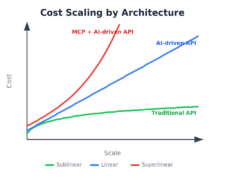
An enterprise builds an AI-powered contract review API that costs $1.58 per document to process: loading the contract, running five extraction passes through an LLM, flagging risks, and generating a summary. The unit economics are reasonable, and the API works well when called by internal applications. Then the team exposes this API via MCP for … continue reading

Over the past year, I’ve watched teams roll out increasingly capable AI systems, tooling, and agents, and then struggle to trust, adopt, or scale them. I’d argue that a lot of today’s AI adoption problem starts with how we are framing the shift. “Human-in-the-loop” (often shortened to HITL) has become one of today’s most overhyped … continue reading

The adoption of AI in enterprise organizations is causing an evolution in the practice of strategic portfolio management (SPM). The changes reshaping this — lean portfolio management, shorter application delivery cycles and the rise of agentic AI — are redefining how organizations align investment with execution. Many organizations that have brought AI into their operations … continue reading
AI agents promise a revolution in customer experience and operational efficiency. Yet, for many enterprises, that promise remains out of reach. Too many AI projects stall in the pilot phase, fail to scale, or are scrapped altogether. According to Gartner, 40% of agentic AI initiatives will be abandoned by 2027, while MIT research suggests 95% … continue reading

Gartner recently revealed a new report where it predicted that by the end of 2027, over 40% of agentic AI projects will be canceled. Factors contributing to this decline include escalating costs, unclear business value, and inadequate risk controls. According to the analyst firm, one trend it is seeing is that vendors are hyping up … continue reading

Advancements in artificial intelligence continue to give developers an edge in efficiently producing code, but developers and companies can’t forget that it’s an edge that can always cut both ways. The latest innovation is the advent of agentic AI, which brings automation and decision-making to complex development tasks. Agentic AI can be coupled with the … continue reading

Traditionally, developers have used test-driven development (TDD) to validate applications before implementing the actual functionality. In this approach, developers follow a cycle where they write a test designed to fail, then execute the minimum code necessary to make the test pass, refactor the code to improve quality, and repeat the process by adding more tests … continue reading