
In many ways, generative AI has made finding information on the Internet a lot easier. Instead of spending time scrolling through Google search results, people can quickly get the answers they’re looking for with a simple natural language prompt. However, sometimes people have questions that require recent information, and because LLMs are trained on past … continue reading

The Model Context Protocol (MCP) was created to enable AI agents to connect to data and systems, and while there are a number of benefits to having a standard interface for connectivity, there are still issues to work out regarding privacy and security. Already there have been a number of incidents caused by MCP, such … continue reading

AI-generated code introduces a lot of risk into the development process. A recent Sonatype report found that AI hallucinated 27% of upgrade recommendations for open source projects, while research from Veracode found that AI introduced security vulnerabilities in 45% of 80 coding tasks across 100+ different LLMs. Now, new research from Black Duck is shedding … continue reading
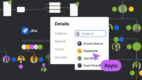
Atlassian today announced that agents have been incorporated into Jira, allowing development teams to shift work to agents while maintaining visibility of tasks and progress. “With both people and agents on the team, Jira is how you do 10x the work, without 10x the chaos. Instead of agents firing off work for individuals with no … continue reading

Userware today announced a new version of XAML.io, its browser-based IDE for .NET development built on top of the open source framework OpenSilver. The two main capabilities being added in XAML.io 0.6 are the ability to share code using a URL and support for NuGet packages. Developers will now be able to share a link … continue reading

Red Hat is introducing a unified AI platform for deploying and managing AI models, agents, and applications. Red Hat AI Enterprise aims to help companies that are stuck in AI pilot phases as a result of fragmented tools and infrastructure, by offering a standard environment where organizations can perform AI inference, customize and tune models, … continue reading

Members of the MySQL community are calling on Oracle to establish a foundation for the project, with an open letter that lays out a few pressing concerns affecting MySQL today. “We see MySQL kind of becoming a legacy technology, and we think if we don’t take some steps, it risks becoming irrelevant … We want … continue reading

Anthropic releases Claude Sonnet 4.6 Claude Sonnet 4.6 features improved skills in coding, computer use, long-context reasoning, agent planning, knowledge work, and design. It is now the default model in claude.ai and Claude Cowork, has a 1M context window (beta), and is priced the same as Sonnet 4.5, at $3 per million input tokens and … continue reading
Moderne has announced that its OpenRewrite code refactoring platform now supports Python, enabling organizations to modernize their systems, fix vulnerabilities, and run change initiatives over a larger proportion of their application and data infrastructure. OpenRewrite is powered by the company’s Lossless Semantic Tree (LST), a code model that resolves symbols, tracks relationships, and preserves intent, … continue reading

FinOps practitioners are finding themselves feeling pressure to embed financial context earlier in the engineering life cycle, rather than after the bill comes in. This is according to the FinOps Foundation’s 2026 State of FinOps report, which includes responses from over 1,100 practitioners. They found that teams are wanting FinOps context earlier in the life … continue reading

Quest Software today announced the Quest Trusted Data Management Platform, unifying data modeling, data cataloging, data governance, data quality, and a data marketplace to enable organizations to deliver AI-ready data throughout their business. It can be leveraged to create a single, unified data product that will be usable by different departments throughout the organization as … continue reading

Graphwise is attempting to address some of the challenges of RAG with its new GraphRAG offering, which is now generally available. GraphRAG acts as a semantic layer on top of knowledge graphs that LLMs can utilize to provide context-rich and verifiable answers. According to the company, a typical RAG implementation flattens data into chunks, and … continue reading