Parasoft has announced that the latest releases of its test automation solutions C/C++test and C/C++test CT are now available. First previewed at embedded world North America last month, the updates include agentic AI workflows, static analysis for CUDA C/C++, and improved support for GoogleTest. Parasoft’s MCP server allows AI agents to be connected to C/C++test … continue reading

Several new updates make their way into the MCP specification It has been one year since Anthropic first open sourced Model Context Protocol (MCP), and to celebrate this anniversary a new version of the specification is being released. “It’s hard to imagine that a little open-source experiment, a protocol to provide context to models, became … continue reading

It has been one year since Anthropic first open sourced Model Context Protocol (MCP), and to celebrate this anniversary a new version of the specification is being released. “It’s hard to imagine that a little open-source experiment, a protocol to provide context to models, became the de-facto standard for this very scenario in less than … continue reading
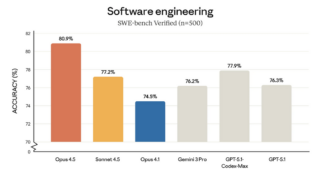
Anthropic has released the latest version of its largest Claude model, Opus. Claude Opus 4.5 is better at handling complex reasoning than previous Claude models and makes improvements across agentic tool use, computer use, novel problem solving, and more. The company says early testers of the new model claim that it handles ambiguity better and … continue reading

The world of software development is undergoing a transformation, and GitKraken’s free, two-day virtual event, GitKon 2025, is set to redefine what it means to “ship responsibly in the age of AI.” The theme of the conference is “The Builder’s Era,” and according to Jeremy Castile, VP of developer research at host company GitKraken, the … continue reading

CIOs and CTOs have heard the same refrain for years on end: before you can deploy AI, you need to clean and unify your data. That belief made sense in the era of legacy machine learning, when reductive models required meticulous preprocessing and endless consulting hours. Vendors and integrators built entire business models on that … continue reading

During the Microsoft Ignite conference, Microsoft announced several new products and features designed to enable the agent-powered enterprise. “The future of work will be shaped by Frontier Firms—organizations that are human-led and agent-operated. These companies are reshaping how work gets done, empowering every employee with an AI assistant, amplifying impact with human-agent teamwork, and reinventing … continue reading
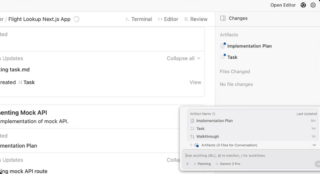
Coinciding with its announcement of Gemini 3 today, Google announced the launch of a new agentic development platform, Google Antigravity. The company sees Antigravity as an evolution of the IDE into an agent-first future, with capabilities like browser control and asynchronous interaction patterns. “With models like Gemini 3, we have started hitting the point in … continue reading

Doctors have to follow the Hippocratic Oath, swearing to do no harm to their patients. Developers ought to be following a similar oath, promising to do no harm to their codebase when implementing new features or making changes. Mitchell Johnson, chief product development officer at Sonatype, explored this concept and if it’s even still possible … continue reading

OpenAI’s latest update delivers GPT-5.1 models and capabilities to give users more control over ChatGPT’s personality According to the company, users will now have more control over ChatGPT’s tone and style. It had added a few preset tone options earlier this year, and now it is refining the options and adding new ones. The existing … continue reading

The web design platform Webflow today announced new updates to its platform to align it more with the vibe coding experience, allowing any user to bring their ideas to life regardless of their coding skills. According to the company, this new capability, App Gen, enables users to move from creating websites into creating web experiences. … continue reading

Over the past several years, the productivity gains of AI have been touted left and right, but just because AI can generate code doesn’t necessarily mean that it helps speed up the software development life cycle. According to a report from GitLab, an “AI Paradox” has emerged. “While AI accelerates coding, fragmented toolchains and new … continue reading