
When I stepped into the program, it had gone through multiple attempts without reaching production readiness. Each previous effort had made partial progress — but none had gotten the system to a state it could actually ship. No, the team wasn’t solving the wrong technical problems; the real issue was a lack of alignment at … continue reading

The conversation around AI in software development has shifted from “if” it will be used to “how much” it is already producing. As of early 2026, the volume of machine-generated contributions has hit a critical mass that traditional manual workflows can no longer sustain. According to the recent Sonar State of Code Developer Survey report, AI … continue reading
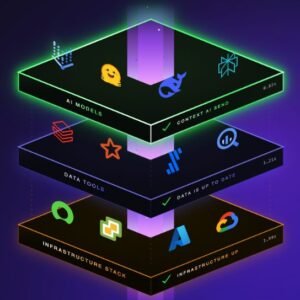
A top-10 global bank recently told my team that what took six months with their legacy orchestration platform, they rebuilt in six days. Not because they hired better engineers. Because the coordination layer matched the complexity of what they were trying to do. That gap between what enterprises need to automate and what their orchestration … continue reading

Enterprise AI has reached an inflection point. After a wave of experimentation with LLMs, engineering leaders are discovering a hard truth: better models alone don’t deliver better outcomes. Context does. This realization is reshaping how organizations build AI systems as they move from copilots to fully autonomous agents. But there is “context” in that LLMs … continue reading
Some outages are straightforward. A region fails. A bad deploy slips through. A dependency goes dark. The fault gets traced, fixed, and the system moves on. The failures that do the most damage often go unseen beforehand. Everything appears healthy until traffic spikes. Servers are running. The database responds. The cache is up. Then checkout … continue reading
For much of software security history, development has followed a well-defined pattern: humans wrote code, tools checked it, humans reviewed it and if everything looked good, the code shipped. Tools were largely passive, existing to alert you when something was wrong, not invent new behavior. But the newest arrival on the software development scene has … continue reading

Today’s enterprises are actively embracing AI, prioritizing clear, measurable ROI. Yet as these organizations rush into production, many are discovering that the technical debt AI accumulates can be more complex and costlier than that of legacy systems. In fact, according to a study from HFS Research and Unqork, while 84% of organizations expect AI to … continue reading

Agentic artificial intelligence is becoming ingrained in enterprise operations at lightning speed. With the promise of delivering unprecedented productivity (and pushed by CEOs and CIOs who see AI as the key to being competitive), AI agents have become “co-pilots” for practically every developer. As a result, AI-generated code is turning up everywhere. But the hidden … continue reading

In the early 2020s, the software industry chased a singular north star: developer velocity. We promised that LLMs and agentic workflows would usher in a golden age of productivity. We are shipping code significantly faster than three years ago. Yet the structural integrity of our systems has never been more precarious. In 2026, we are … continue reading

You rarely think about the systems that keep your digital life running. When a message is sent instantly, a payment clears without friction, or a video loads on the other side of the world without buffering, it feels natural. Like turning on a tap and expecting water. But behind that simplicity sits a vast and … continue reading

There is a piece of management advice that circulates widely, feels intuitive, and is quietly becoming one of the more dangerous ideas in enterprise technology leadership. It goes something like this: once you cross into management, your job is to set direction, develop people, and remove obstacles. The technical details — the actual behavior of … continue reading

Most engineering organizations running traditional CI/CD pipelines eventually hit a ceiling. Deployments work until they don’t, and when they break, the fixes are manual, inconsistent, and hard to trace. For example, we recently reached that point after our third deployment incident in two months, each one caused by configuration drift between environments. Our pipelines had … continue reading

Architecture diagrams lie, a little. Not on purpose. They show boxes and arrows in clean arrangements and make everything look sequential and tidy. What they cannot show is what fails first, what surprised you, and which decisions you would fight hardest to keep if someone wanted to simplify things. This is about those decisions. The … continue reading

For software engineering leaders, data availability and quality issues now represent the primary barrier to AI implementation. Organizations that lack automated quality controls embedded throughout the software development life cycle (SDLC) face escalating risks: poor data quality disrupts business operations with bugs, triggers compliance violations, and derails modernization projects. Software engineering leaders can avoid costly … continue reading