
Modern DevOps pipelines are extraordinarily fast. Teams can spin up infrastructure instantly and automate builds and deployments. Yet despite these speed gains in tooling, many organizations still face slow, unpredictable, and painful release processes. It isn’t the CI system that holds releases back. It isn’t a lack of automation skills or test cases. It’s something … continue reading
In our DevOps-driven world of CI/CD pipelines and rapid deployments, it’s easy to assume that automation and now AI have made manual testing obsolete. But the reality is different. Manual testers still play a critical role in quality assurance, providing the kind of human insight and context-aware validation that automated tests can’t replicate. The challenge? … continue reading

Picture this: You’re testing a new AI-powered code review feature. You submit the same pull request twice and get two different sets of suggestions. Both seem reasonable. Both catch legitimate issues. But they’re different. Your instinct as a QA professional screams “file a bug!” But wait—is this a bug, or is this just how AI … continue reading

What happens when you don’t have any instructions to follow? The board game “City of the Six Moons” plays with this concept, giving players a box of components and an instruction booklet in an alien language, and lets players figure out how it works. Hollandspiele, the game’s designers, say on their website: You will never … continue reading
Decades ago, we abandoned the practice of measuring developers for the number of lines of code they developed. We realized it was too easy to game the system by writing bloated code that reduced value rather than increased it. The best developers, who made code smaller, faster, and easier to maintain, were penalized, because they … continue reading

Over the past year, I’ve watched teams roll out increasingly capable AI systems, tooling, and agents, and then struggle to trust, adopt, or scale them. I’d argue that a lot of today’s AI adoption problem starts with how we are framing the shift. “Human-in-the-loop” (often shortened to HITL) has become one of today’s most overhyped … continue reading

Software teams have spent years treating accessibility like technical debt—something to address in the backlog when there’s time, budget and organizational will. That approach has failed. Despite growing regulatory pressure from legislation like the European Accessibility Act and a steady drumbeat of ADA lawsuits, only 54 percent of organizations self-report meeting WCAG 2.2 standards; however, … continue reading

Most supply chain practitioners already understand the value of a Software Bill of Materials. SBOMs give you visibility into the libraries, frameworks, and dependencies that shape modern software, allowing you to respond quickly when vulnerabilities emerge. But as AI native systems become foundational to products and operations, the traditional SBOM model no longer captures the … continue reading

Enterprises are making faster progress with agentic AI than many expected, not because the tooling is mature, but because companies have realized they can’t afford to wait. The leading 10 to 20% of organizations are racing ahead, standing up internal “agent platforms” that handle planning, tool selection, long running memory, workflow coordination, and human in … continue reading

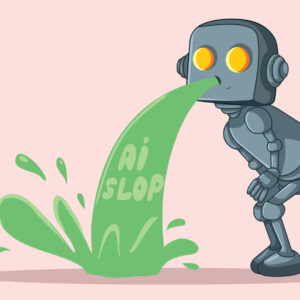
AI workslop is any AI-generated work that masquerades as professional output but lacks substance to advance any task meaningfully. If you’ve received a report that took you three reads to realize it said nothing, an email that used three paragraphs where one sentence would do, or a presentation with visually stunning slides containing zero actionable … continue reading

I’ve been teaching at the Rhode Island School of Design for 18 years. This semester, for the first time, students lined up after my opening lecture, asking the same question: “What’s the role of AI in the design field? How do I prepare for this?” Their concerns mirror what I’m hearing from senior UX leaders … continue reading

Flaky tests have long been a source of wasted engineering time for mobile development teams, but recent data shows they are becoming something more serious: a growing drag on delivery speed. As AI-driven code generation accelerates and pipelines absorb far greater volumes of output, test instability is no longer an occasional nuisance. This constant rise … continue reading

Due to time-to-market pressure and resource constraints, mobile app developers are shipping code that’s under-tested and under-protected. A recent Checkmarx report shows that the vast majority (81%) of organizations admit to knowingly shipping vulnerable code either sometimes or often. Maybe they know they have a problem and plan to fix it downstream. Or maybe they’re … continue reading

Enterprises are waking up to a hard truth. AI won’t transform their business with a flashy demo. It takes infrastructure, governance — and engineering. For the past two years, AI has headlined every keynote and dominated boardroom conversations. But the tone is shifting. Tech stocks are cooling, AI teams are restructuring, and studies from MIT … continue reading